
Prostate surgery for an enlarged prostate (benign prostatic hyperplasia, BPH) removes or opens the overgrown inner prostate through the urethra, using TURP or laser enucleation (HoLEP), for men whose urinary symptoms persist despite medicines or who develop retention, bleeding, stones or kidney effects. Most men stay one to three days and recover over four to six weeks. Many men with BPH never need an operation: lifestyle changes and medicines control symptoms for a large number.
YOUR SURGEON
Who treats this at Lotus
Urology
Dr. Manohar Badrappa
Also listed as Dr. Manohar
- Qualifications
- MBBS, MS (General Surgery), MCh (Urology)
- Experience
- 24 years
- Fee
- ₹700
- Languages
- English, Hindi, Kannada, Tamil, Telugu
- Registration
- KMC 63476
Kidney and ureteric stones · Urinary difficulty · Blood in urine · Prostate symptoms
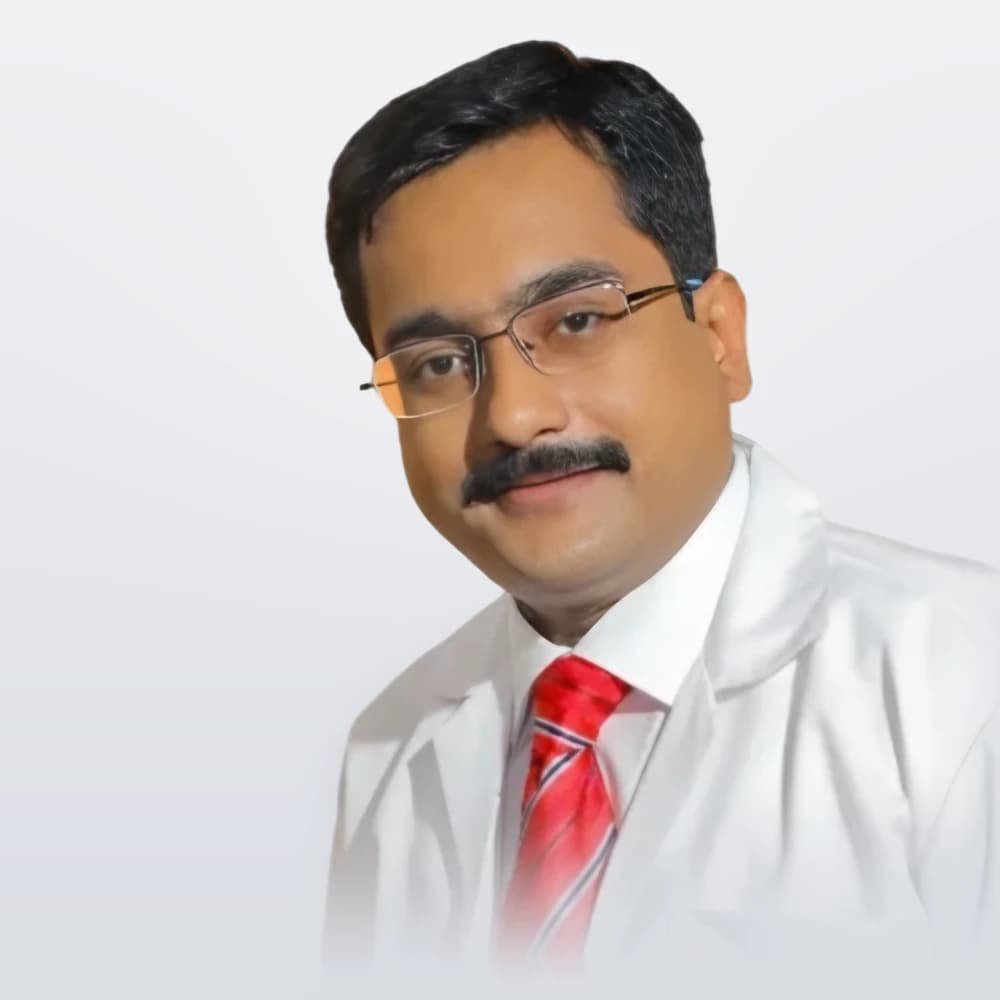
Urology
Dr. Bivek Kumar
- Qualifications
- MBBS, MS (General Surgery), MCh (Urology)
- Experience
- 17 years overall; 9 as specialist
- Fee
- ₹700
- Languages
- English, Hindi, Kannada, Malayalam, Bengali
- Registration
- KMC 85041
★ 90% (101 votes) on Practo
Kidney stones · Prostate · Male reproductive health
COST IN BANGALORE
How much does prostate treatment & surgery cost in Bangalore?
₹80,000 to ₹2,00,000Bengaluru market range · HexaHealth — TURP cost in Bangalore ↗ · as of 2026-10-14
Typical hospital stay: 2 to 3 days
Bengaluru market estimate for transurethral resection of the prostate (TURP), as published by HexaHealth (average ₹1,10,000; page last updated September 2022). Laser prostate procedures such as HoLEP are priced separately and usually cost more. This is not a Lotus quote. Ask the Lotus team for an itemised estimate for your case and insurance.
What is included, excluded and what changes the price →INSURANCE & CASHLESS
Using health insurance at Lotus
Lotus works with health insurers and TPAs for cashless and reimbursement claims. Share your policy details before a planned admission and the care team checks eligibility and pre-authorisation for you.
Who needs prostate surgery for BPH, and who does not?
The prostate commonly enlarges with age. It can cause a weak stream, hesitancy, dribbling, a feeling of incomplete emptying, frequent urination and getting up at night. Surgery is considered when bothersome symptoms persist despite medicines, when side effects of medicines are unacceptable, or when complications develop: repeated urinary retention needing a catheter, recurrent urinary infections, bladder stones, repeated bleeding from the prostate, or kidney damage from back pressure.
Men with mild symptoms that do not trouble them usually do not need treatment beyond advice and periodic review. An enlarged prostate on ultrasound is not by itself a reason for surgery, because prostate size does not closely match symptoms. BPH is not cancer and does not turn into cancer, but the two can coexist, so your doctor may discuss a PSA blood test and examination before treatment decisions.
- Bothersome symptoms despite medicines
- Repeated urinary retention or catheter dependence
- Recurrent urinary infections or bladder stones
- Recurrent bleeding from the prostate
- Kidney effects from back pressure
- Not needed for mild, non-bothersome symptoms
What are the alternatives to prostate surgery?
Simple measures help many men: reducing fluids in the two hours before bed, cutting down caffeine and alcohol, emptying the bladder twice (double voiding), treating constipation and reviewing medicines such as some cold remedies that worsen urinary flow. Alpha-blockers such as tamsulosin or silodosin relax the prostate and bladder neck within days; they can cause dizziness and reduced ejaculation. 5-alpha-reductase inhibitors such as finasteride or dutasteride shrink a larger prostate over several months and reduce the risk of retention, and are often combined with an alpha-blocker.
Other medicines treat an overactive bladder or night-time urine production, and tadalafil is an option for some men. Newer minimally invasive procedures, such as water vapour therapy, prostatic urethral lift and prostate artery embolisation, aim to preserve ejaculation but suit selected prostates and are not available everywhere; ask whether they are offered and appropriate for you.
- Evening fluid and caffeine reduction
- Alpha-blockers for faster relief
- 5-alpha-reductase inhibitors for larger prostates
- Combination medicine therapy
- Overactive bladder and night-time urine treatments
- Minimally invasive procedures in selected men
How is the decision made, and what tests are done?
Assessment usually includes a symptom score questionnaire (such as the International Prostate Symptom Score), a frequency-volume chart for a few days, an examination including a digital rectal examination, urine tests, kidney function, and a PSA test after discussion of what it can and cannot show. Ultrasound measures prostate size and the urine left in the bladder after voiding. A urine flow test (uroflowmetry) records how fast you pass urine.
Some men need further tests: cystoscopy to look inside the urethra and bladder, urodynamic studies when the bladder muscle may be weak or overactive, or MRI and biopsy if cancer is suspected. Prostate size, the shape of the middle lobe, blood-thinning medicines, heart or lung disease, and how much you value preserving ejaculation all shape which operation fits.
- Why do you recommend surgery rather than more medicines?
- Which operation suits my prostate size and health?
- Will I still ejaculate normally afterwards?
- How long will the catheter stay in?
- What is the chance of leakage or a repeat operation?
- What should I do about my blood thinners?
TURP vs HoLEP vs other operations: how is prostate surgery done?
TURP (transurethral resection of the prostate) uses a telescope passed through the urethra to cut away the obstructing inner prostate in small pieces with an electric loop. Bipolar TURP uses saline irrigation, which avoids a fluid-absorption problem seen with older monopolar systems. TURP is well established for small to medium prostates. No cut is made on the skin.
HoLEP (holmium laser enucleation of the prostate) uses a laser through the same telescope route to peel the obstructing tissue away from the capsule in whole lobes, which are then broken up and removed from the bladder. Enucleation can treat prostates of almost any size and tends to involve less bleeding, shorter catheter time and lower retreatment rates, but it requires specific equipment and training. Laser vaporisation may suit men who cannot stop blood thinners. Very large prostates may otherwise need simple prostatectomy through an abdominal or keyhole approach. Ask which techniques are available at your hospital and which suits your prostate.
- TURP: electric loop resection through the urethra
- Bipolar TURP: saline irrigation, lower fluid-absorption risk
- HoLEP: laser enucleation suited to a wide range of sizes
- Laser vaporisation: an option on some blood thinners
- Simple prostatectomy for very large glands
- Tissue sent for pathology after TURP and HoLEP
How long is the hospital stay after prostate surgery?
Most operations are done under spinal anaesthesia, with general anaesthesia as an alternative. A catheter is placed at the end of the operation, often with saline irrigation to wash out blood for the first day. Typical stays are one to three days; the catheter is usually removed after one to three days, and you go home once you are passing urine satisfactorily. A few men go home with a catheter and return for removal.
Blood thinners need a specific plan agreed with your cardiologist or physician. Older men often have diabetes, heart disease or chest problems, which are optimised before surgery. A family member should be available to accompany you home and to help you manage the catheter if needed.
- Spinal or general anaesthesia
- Catheter with bladder irrigation
- Catheter removal after one to three days
- Discharge once passing urine well
- Blood-thinner plan agreed in advance
- Pathology result at follow-up
What are the risks and side effects of TURP and HoLEP?
The most common long-term change is retrograde ejaculation, where semen flows back into the bladder at orgasm; it is harmless but affects natural fertility and many men notice it. Temporary urgency, frequency and burning are common for several weeks. Bleeding can recur around ten to fourteen days after surgery as scabs separate, and urinary infection can occur.
Less common risks include temporary or, rarely, persistent urinary leakage, narrowing of the urethra or bladder neck needing further treatment, the need for a blood transfusion, and failure to pass urine after catheter removal. Erectile function is usually unchanged, but some men report a change. With older monopolar TURP, absorption of irrigation fluid (TUR syndrome) is a rare but serious risk. Over years, some men need a repeat procedure, less often after enucleation.
- Retrograde (dry) ejaculation
- Temporary urgency and burning
- Delayed bleeding around two weeks
- Urinary infection
- Leakage, usually temporary
- Urethral or bladder neck narrowing; repeat surgery over time
Recovery after prostate surgery, week by week
Recovery is gradual because the raw area inside the prostate takes six weeks or more to heal. Drink enough water to keep urine light in colour, avoid constipation with fibre-rich food such as vegetables, fruit, dal and whole grains, and avoid straining. Avoid heavy lifting, vigorous exercise, cycling and sex for about four to six weeks or as advised.
Driving can usually resume after about two weeks when you are comfortable and not on strong painkillers, but long, bumpy journeys and stop-start traffic can trigger bleeding in the early weeks. Plan a toilet stop on longer commutes. Pelvic floor exercises can help if you notice leakage.
- Days 1 to 3: catheter removal, passing urine, going home
- Week 1: frequency, urgency and burning; small clots possible
- Week 2: possible bleeding as scabs separate; increase fluids and rest
- Weeks 2 to 4: return to desk work for many; no heavy lifting
- Weeks 4 to 6: sex and exercise usually resumed after review
- Months 2 to 3: flow review and symptom score repeated
How much does prostate surgery cost in Bangalore?
The cost depends on the technique (bipolar TURP, laser enucleation, laser vaporisation or simple prostatectomy), the size of the prostate and operating time, and consumables such as resection loops, laser fibres, morcellator blades and irrigation fluid. The length of stay and whether you go home with a catheter also matter.
Pre-operative tests, cardiology clearance, management of blood thinners, histopathology, room category and comorbidities such as diabetes, heart disease or kidney impairment affect the final bill. Ask Lotus for an itemised estimate that sets out what the package includes and excludes, such as follow-up visits, catheter removal and medicines after discharge.
- Technique and operating time
- Laser fibres, resection loops and irrigation fluid
- Room category and length of stay
- Cardiology and medical clearance
- Histopathology and follow-up
- Package inclusions and exclusions
Does insurance cover prostate surgery, and how does cashless work?
Surgery for BPH is generally covered by health insurance in India, but many retail policies list prostate enlargement under a specific waiting period, often one to three years, and an existing diagnosis may count as pre-existing. Senior citizen policies may have co-payment. Some newer minimally invasive procedures may have specific limits or terms, so check before choosing.
For cashless treatment, the hospital sends a pre-authorisation request to the insurer or TPA with the urologist’s notes, ultrasound and test reports, and the estimate, ideally several days before admission. Keep your policy card and photo ID ready. Room-rent limits, co-payment and non-payable consumables can leave a balance at discharge; ask the insurance desk to explain this in advance.
- Specific waiting period for prostate conditions
- Pre-existing condition rules
- Co-payment in senior citizen policies
- Limits on newer procedures
- Pre-authorisation with reports and notes
- Room-rent caps and non-payable items
Warning signs after prostate surgery
Some blood in the urine, burning and frequency are expected for several weeks. Contact the Lotus team or go to the nearest emergency department urgently if you notice any of the following.
- Unable to pass urine, or a blocked catheter
- Heavy bleeding or thick clots in the urine
- Fever, shivering or confusion
- Severe lower abdominal pain or swelling
- Pain or swelling in a testicle
- Calf swelling, chest pain or breathlessness
- Very little urine despite drinking
- Dizziness or fainting
- NICE CG97 — Lower urinary tract symptoms in men: management ↗
- EAU Guidelines on the Management of Non-neurogenic Male LUTS ↗
- AUA Guideline — Management of LUTS attributed to BPH ↗
- NHS — Enlarged prostate ↗
- MedlinePlus — Transurethral resection of the prostate ↗
Medical information is general and does not replace an individual consultation.
PATIENT QUESTIONS
Prostate Treatment & Surgery: questions patients ask
How much does prostate surgery cost in Bangalore?
The cost depends on the technique (bipolar TURP, laser enucleation, laser vaporisation or simple prostatectomy), prostate size and operating time, consumables such as laser fibres and irrigation fluid, room category, days in hospital, cardiology clearance and histopathology. Ask Lotus for an itemised estimate that shows package inclusions and exclusions for your case.
Is HoLEP better than TURP?
Both relieve obstruction effectively. HoLEP can treat prostates of almost any size and tends to involve less bleeding, a shorter catheter time and fewer repeat operations over time, while TURP is well established for small to medium prostates. HoLEP needs specific equipment and training. The right choice depends on your prostate size, health, blood thinners and the expertise available.
Can an enlarged prostate be treated without surgery?
Often, yes. Reducing evening fluids, caffeine and alcohol, and medicines such as alpha-blockers and 5-alpha-reductase inhibitors control symptoms for many men. Surgery is considered when symptoms remain bothersome, medicines cause side effects, or complications such as retention, stones, recurrent infection, bleeding or kidney effects develop.
How long will I have a catheter after prostate surgery?
Most men have a catheter for one to three days after TURP or HoLEP, often with saline irrigation on the first day. You go home once you are passing urine satisfactorily. A few men go home with a catheter for a short time and return for removal. Your urologist will tell you what to expect.
Will prostate surgery affect my sex life?
Most men keep erections as before, though a few notice a change. The most common effect is retrograde ejaculation, where little or no semen comes out at orgasm because it flows back into the bladder. This is harmless but affects natural conception. Discuss this before surgery, especially if you may want children.
Will I have urine leakage after prostate surgery?
Some men have urgency or occasional leakage for a few weeks while the bladder settles. Persistent leakage is uncommon after surgery for benign enlargement. Pelvic floor exercises often help. Tell your urologist if leakage continues beyond a few months, because further assessment and treatment are available.
When can I drive and return to work after prostate surgery?
Many men return to desk work in two to three weeks and can drive after about two weeks when comfortable and off strong painkillers. Avoid heavy lifting, cycling and strenuous exercise for four to six weeks, because they can trigger bleeding. Long, stop-start journeys may be uncomfortable early on.
Does insurance cover prostate surgery?
Generally yes, but many retail policies place prostate enlargement under a specific waiting period of one to three years, and senior citizen policies may include co-payment. Some newer minimally invasive procedures may have limits. For cashless treatment, the hospital sends a pre-authorisation request with your reports and the urologist’s notes to the insurer or TPA before admission.
Is an enlarged prostate the same as prostate cancer?
No. Benign enlargement (BPH) is not cancer and does not turn into cancer, but both are common in older men and can coexist. Your doctor may discuss a PSA blood test and examination, and sometimes MRI, to look for cancer. Tissue removed during TURP or HoLEP is also examined under the microscope.
LOCATION & DIRECTIONS
Getting to Lotus Hospital, HSR Layout
Lotus Multi Speciality Hospital
2361, 24th Main Road, 1st Sector, HSR Layout, Bengaluru, Karnataka 560102
Near Bangalore One, HSR Layout 1st Sector
Open 24 hours, 7 days · OPD timings vary by doctor
Lotus is on 24th Main Road in Sector 1, near Bangalore One. Autos and cabs can drop at the entrance on 24th Main.
Head into HSR Sector 1 from the Agara Lake side of the Outer Ring Road and continue to 24th Main Road.
Take the Sarjapur Road or 27th Main HSR approach towards Sector 1, then turn onto 24th Main Road.
Travel along the Outer Ring Road towards Agara, enter HSR Layout Sector 1 and continue to 24th Main Road.
Use the Outer Ring Road from Silk Board towards HSR Layout and turn into Sector 1.
Cross from Hosur Road into HSR Layout through the Sector 7 side and continue north to Sector 1.
Come towards Agara and the Outer Ring Road junction, then into HSR Layout Sector 1.
Take Hosur Road to Silk Board, then the Outer Ring Road into HSR Layout. Best for planned visits.
Travel time changes with traffic. Check live directions before you leave and allow time for registration.