

Fibroid and ovarian cyst surgery removes non-cancerous growths from the womb (myomectomy) or ovary (cystectomy) while usually preserving the uterus and ovary, for women with heavy bleeding, pain, pressure symptoms, fertility concerns or cysts that persist or look suspicious. Laparoscopic surgery usually means one to two nights in hospital and two to four weeks’ recovery. Many fibroids and most small cysts never need an operation, so the first step is working out whether yours does.
YOUR SURGEON
Who treats this at Lotus
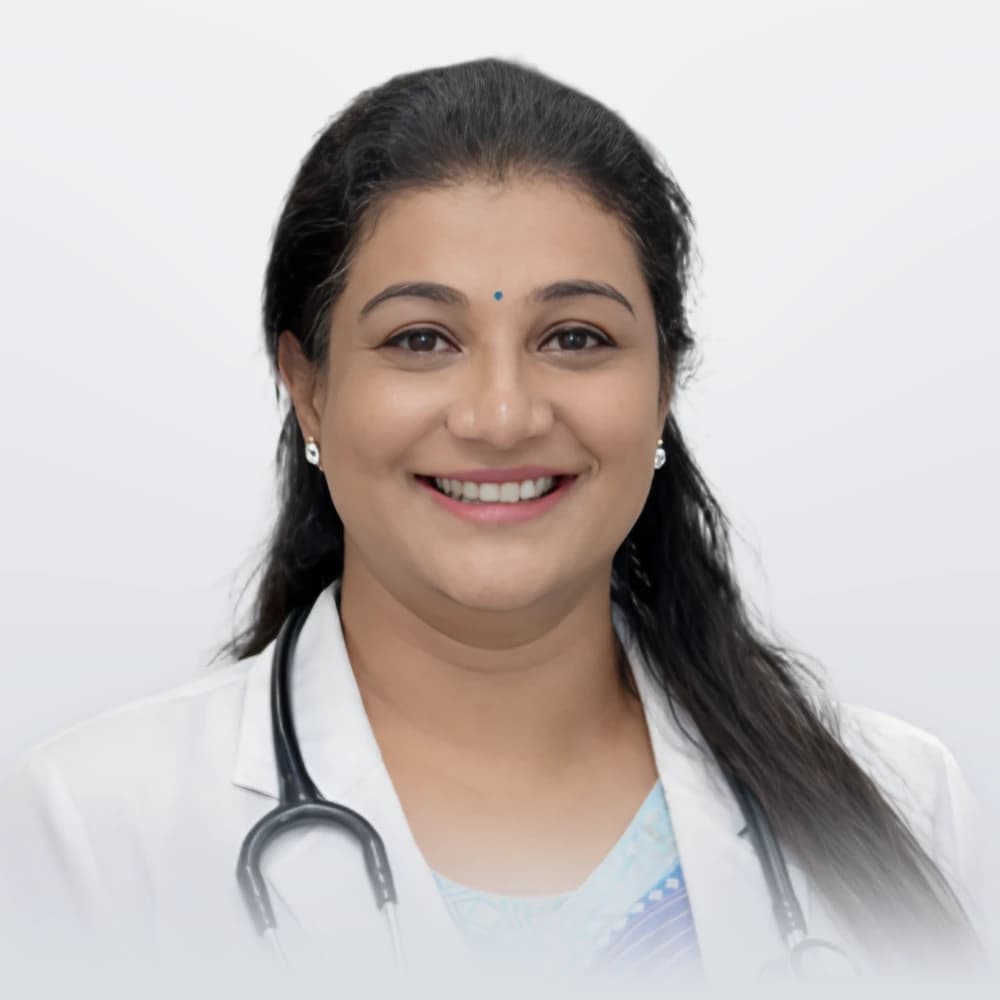
Obstetrics & Gynaecology
Dr. Siri Vani Reddy
Also listed as Dr. Srivani Reddy
- Qualifications
- MBBS, MS (OBG)
- Experience
- 18 years overall; 15 as specialist
- Fee
- ₹700
- Registration
- KMC 79928
★ 99% (976 votes) on Practo
Pregnancy care and follow-up · Normal and caesarean delivery planning · Periods and pelvic pain · PCOS

Obstetrics & Gynaecology
Dr. Vishnu Vandana
- Qualifications
- MBBS, MS (OBG)
- Experience
- 21 years overall; 16 as specialist
- Fee
- ₹700
- Languages
- Hindi, English, Tamil, Telugu, Kannada
- Registration
- KMC 88796
★ 92% (97 votes) on Practo
Menstrual changes and pelvic pain · Pregnancy consultation · Fertility and pre-conception · Contraception
Obstetrics & Gynaecology
Dr. Daksha Bakre
- Qualifications
- MBBS, DNB (OBG)
- Experience
- 17 years overall; 13 as specialist
- Fee
- ₹700
- Registration
- KMC 97874
★ 97% (956 votes) on Practo
Menstrual changes and pelvic pain · Pregnancy consultation · Fertility and pre-conception · Contraception
COST IN BANGALORE
How much does fibroid & ovarian cyst surgery cost in Bangalore?
₹40,000 to ₹1,20,000Bengaluru market range · HexaHealth — Myomectomy cost in Bangalore ↗ · as of 2026-10-14
Typical hospital stay: 1 to 2 days
Bengaluru market estimate for myomectomy (fibroid removal), as published by HexaHealth (average ₹90,000). HexaHealth publishes other fibroid pages with different figures, including ₹75,000 to ₹1,85,000 for fibroid removal surgery, so the number, size and position of fibroids strongly affect cost. This is not a Lotus quote. Ask the Lotus team for an itemised estimate for your case and insurance.
What is included, excluded and what changes the price →INSURANCE & CASHLESS
Using health insurance at Lotus
Lotus works with health insurers and TPAs for cashless and reimbursement claims. Share your policy details before a planned admission and the care team checks eligibility and pre-authorisation for you.
Do all fibroids and ovarian cysts need surgery?
No. Fibroids are very common, and many women have them without symptoms; a fibroid found on a routine scan that is not causing bleeding, pain, pressure or fertility problems can usually be watched. Fibroids tend to shrink after menopause. Treatment is considered when fibroids cause heavy periods and anaemia, pain, a swollen abdomen, frequent urination or constipation, or when they distort the womb cavity in a woman trying to conceive.
Most ovarian cysts in women of reproductive age are functional cysts linked to ovulation and disappear on their own within a few menstrual cycles. Surgery is usually considered for cysts that persist or grow on repeat scans, are large, cause pain, have features that need tissue diagnosis, or are endometriomas or dermoid cysts affecting symptoms or fertility. Sudden severe pain can mean twisting of the ovary (torsion), which is an emergency.
- Fibroids causing heavy bleeding or anaemia
- Pressure on bladder or bowel
- Fibroids distorting the womb cavity before pregnancy
- Cysts that persist or grow on repeat scans
- Cysts with features needing a tissue diagnosis
- Sudden severe pain suggesting torsion
Can fibroids and cysts be treated without surgery?
For fibroid-related heavy bleeding, tranexamic acid and anti-inflammatory medicines can reduce flow, and a hormone-releasing intrauterine system can help when fibroids are small and do not distort the cavity. Hormone-blocking medicines can shrink fibroids and stop periods for a limited time, often used to correct anaemia before surgery; fibroids usually regrow when they are stopped. Uterine artery embolisation, performed by an interventional radiologist through a small tube in the groin or wrist, blocks the fibroids’ blood supply and is an option for women who wish to avoid surgery.
For ovarian cysts, the usual alternative is watchful waiting with a repeat ultrasound after six to twelve weeks. Contraceptive pills do not make an existing cyst disappear faster, though they may reduce new functional cysts. Endometriosis-related cysts can be managed with hormonal treatment when surgery is not needed for pain or fertility. Iron supplements and an iron-rich diet support recovery from anaemia whatever path you choose.
- Tranexamic acid or anti-inflammatory medicines
- Hormone-releasing intrauterine system
- Short-term hormone-blocking medicines
- Uterine artery embolisation
- Repeat ultrasound for most simple cysts
- Hormonal treatment for endometriosis
How is the decision made, and what tests are needed?
A transvaginal or abdominal ultrasound shows the number, size and position of fibroids and the appearance of an ovarian cyst. MRI may be used to map multiple fibroids before myomectomy or to characterise an unclear cyst. For cysts, blood tests such as CA-125 are sometimes used, together with the scan appearance and menopausal status, to estimate the risk that a cyst needs cancer-oriented surgery; other markers may be checked in younger women. CA-125 can also be raised by endometriosis, fibroids and periods, so it is interpreted with care.
Before surgery, expect a blood count, blood group, blood sugar, thyroid tests where relevant, a pregnancy test, and an anaesthetic assessment. Women hoping to conceive may have a test of ovarian reserve, such as AMH, before surgery on an endometrioma, because cyst removal can reduce the number of eggs in that ovary. Fibroid position is described by its relation to the cavity: submucosal (inside), intramural (in the wall) or subserosal (on the outside).
- Do my fibroids or cyst need surgery now, or can we watch?
- Can my uterus and ovary be preserved?
- Will the operation be keyhole, hysteroscopic or open?
- How will fibroid tissue be removed safely?
- How will this affect my fertility and future pregnancy?
- What is the chance of fibroids or cysts coming back?
Laparoscopic, hysteroscopic or open surgery: how is it done?
Fibroids that sit inside the womb cavity can often be removed by hysteroscopic myomectomy: a thin telescope passes through the cervix and the fibroid is shaved away, with no abdominal cuts and usually same-day discharge. Fibroids in the wall or on the outside may be removed by laparoscopic myomectomy through small abdominal cuts, with the womb repaired in layers. Large or numerous fibroids may need an open (abdominal) myomectomy through a cut similar to a caesarean incision.
Ovarian cysts are usually removed laparoscopically: the cyst is peeled away from healthy ovarian tissue (cystectomy) and placed in a retrieval bag before removal, to reduce spill. The whole ovary (oophorectomy) may be removed when little healthy tissue remains, after menopause, or when cancer is a concern. For tissue removal in keyhole surgery, surgeons discuss contained techniques because cutting up an unexpected cancer inside the abdomen can spread it. Conversion to open surgery is sometimes needed for safety.
- Hysteroscopic myomectomy for fibroids inside the cavity
- Laparoscopic myomectomy for suitable wall or outer fibroids
- Open myomectomy for large or multiple fibroids
- Laparoscopic ovarian cystectomy preserving the ovary
- Oophorectomy when the ovary cannot be saved
- Retrieval bags and contained tissue removal
How long is the hospital stay after fibroid or ovarian cyst surgery?
Laparoscopic and open procedures are done under general anaesthesia; hysteroscopic myomectomy may be done under general or spinal anaesthesia. Hysteroscopic surgery is usually a day-care procedure. Laparoscopic cystectomy or myomectomy commonly needs one to two nights, and open myomectomy three to four nights, depending on blood loss, pain control and other medical conditions.
Blood loss is a particular consideration in myomectomy; surgeons may use medicines and techniques to reduce bleeding, and you should be told whether a transfusion might be needed. After surgery you will be helped to walk early, start fluids and light food, and have the catheter removed once you are mobile. Plan for a family member to stay with you on the first night and to help at home for the first week.
- General anaesthesia for keyhole and open surgery
- Day care for most hysteroscopic procedures
- One to two nights after laparoscopic surgery
- Three to four nights after open myomectomy
- Early walking and eating
- Transfusion plan discussed in advance
What are the risks, and how does surgery affect fertility?
Risks include bleeding, transfusion, infection, blood clots, injury to the bladder, bowel or ureters, conversion to open surgery, and adhesions (internal scar tissue) that can cause pain or affect fertility. Rarely, uncontrolled bleeding during myomectomy can lead to hysterectomy; ask your surgeon how this risk applies to you. Hysteroscopic surgery carries a small risk of perforating the womb or fluid overload.
After myomectomy, surgeons often advise waiting several months before trying to conceive so the womb heals. If the cavity was opened or a large part of the wall repaired, a planned caesarean may be recommended in a future pregnancy because of the risk of scar rupture in labour. Fibroids can grow again, and new ones may appear, particularly in younger women with many fibroids. Endometriomas can recur after cystectomy; hormonal treatment afterwards may reduce this.
- Bleeding and possible transfusion
- Infection and blood clots
- Organ injury and conversion to open surgery
- Adhesions affecting pain or fertility
- Possible need for caesarean in future pregnancy
- Recurrence of fibroids or endometriomas
Recovery after myomectomy or cystectomy, week by week
Recovery depends on the approach. Most women feel close to normal within two weeks after hysteroscopic surgery, two to four weeks after laparoscopic surgery and six to eight weeks after open myomectomy. Shoulder-tip pain for a day or two after keyhole surgery is caused by the gas used and settles with walking. A fibre-rich diet with vegetables, fruit, whole grains and enough water helps avoid constipation; ask before restarting iron tablets, which can worsen it.
Avoid heavy lifting, such as water cans or gas cylinders, until cleared. Short car journeys are fine as a passenger; drive only when you can brake suddenly without pain. If your commute across Bengaluru is long, consider working from home for the first week back.
- Days 1 to 2: walking, light diet, catheter out, discharge after keyhole surgery
- Week 1: wound care, short walks, regular pain relief, light spotting
- Week 2: wound check and histopathology result discussion
- Weeks 2 to 4: return to desk work after keyhole surgery; light exercise
- Weeks 6 to 8: return to full activity after open myomectomy
- Months 3 to 6: discuss timing of pregnancy if relevant; repeat scan if advised
How much does fibroid or ovarian cyst surgery cost in Bangalore?
The cost depends on whether the operation is hysteroscopic, laparoscopic or open; on the number, size and position of fibroids or the type of cyst; and on how long the operation takes. Laparoscopic surgery uses disposable instruments, retrieval bags and energy devices, while open surgery generally needs a longer stay. Pre-operative hormone treatment, MRI, transfusion and histopathology add to the total.
Room category, length of stay and medical conditions such as diabetes or anaemia also influence the final bill. Ask Lotus for an itemised estimate, including what the package covers (tests, medicines, consumables, follow-up visits) and what would be charged separately if the plan changes during surgery, for example conversion to open surgery or an extra day in hospital.
- Hysteroscopic, laparoscopic or open approach
- Number and size of fibroids, type of cyst
- Disposable instruments and retrieval bags
- Room category and stay
- MRI, transfusion and histopathology
- Package inclusions and exclusions
Does insurance cover fibroid and ovarian cyst surgery?
Surgery for symptomatic fibroids and ovarian cysts is generally covered by Indian health insurance, but these conditions frequently appear in policy lists of specific diseases with a waiting period, often one to three years. If the fibroid or cyst was diagnosed before the policy began, pre-existing condition terms apply. Emergency surgery for cyst torsion or rupture is handled as an emergency admission.
For cashless treatment, the hospital’s insurance desk submits a pre-authorisation request to the insurer or TPA with scan reports, clinical notes and the estimate, ideally several days before a planned admission. Fertility treatments and some hormone medicines may be excluded. Check room-rent caps, co-payment and non-payable consumables so the balance at discharge is not a surprise.
- Specific waiting period for fibroids and cysts
- Pre-existing condition rules
- Pre-authorisation with scans and notes
- Fertility-related costs often excluded
- Room-rent caps and co-payment
- Non-payable consumables
Warning signs after fibroid or cyst surgery
Mild pain, tiredness and light vaginal spotting are expected. Contact the Lotus team or go to the nearest emergency department urgently if you notice any of the following. Sudden severe one-sided pelvic pain before surgery, especially with vomiting, also needs urgent assessment because it can mean ovarian torsion.
- Heavy vaginal bleeding or large clots
- Fever, chills or foul-smelling discharge
- Increasing abdominal pain or swelling
- Wound redness, pus or opening
- Vomiting with inability to keep fluids down
- Burning urine or inability to pass urine
- Calf swelling, chest pain or breathlessness
- Feeling faint or a racing heartbeat
- NHS — Fibroids ↗
- NHS — Ovarian cyst ↗
- ACOG — Uterine fibroids (patient FAQ) ↗
- NICE NG88 — Heavy menstrual bleeding: assessment and management ↗
- MedlinePlus — Ovarian cysts ↗
Medical information is general and does not replace an individual consultation.
PATIENT QUESTIONS
Fibroid & Ovarian Cyst Surgery: questions patients ask
How much does fibroid removal surgery cost in Bangalore?
Costs depend on whether the operation is hysteroscopic, laparoscopic or open, the number and size of fibroids, operating time, disposable instruments, room category, length of stay, MRI, transfusion and histopathology. Pre-operative hormone treatment can also add to the total. Ask Lotus for an itemised estimate that explains package inclusions and what happens if the plan changes in theatre.
Can fibroids be removed without removing the uterus?
Yes. Myomectomy removes fibroids and repairs the womb, preserving it for future pregnancy. It can be hysteroscopic for fibroids inside the cavity, laparoscopic for suitable fibroids in the wall or outside, or open for large or numerous fibroids. Uterine artery embolisation is a non-surgical alternative. Your scan and pregnancy plans determine which option fits.
How long is the hospital stay after laparoscopic myomectomy or cystectomy?
Most women stay one to two nights after laparoscopic myomectomy or ovarian cystectomy. Hysteroscopic fibroid removal is usually a day-care procedure, while open myomectomy commonly needs three to four nights. The stay depends on blood loss, pain control and any other medical conditions; the care team confirms the plan before admission.
Do ovarian cysts always need surgery?
No. Most cysts in women of reproductive age are functional cysts that disappear within a few menstrual cycles. A repeat ultrasound after six to twelve weeks is often the first step. Surgery is considered for cysts that persist, grow, cause pain, have worrying features on the scan, or are endometriomas or dermoid cysts. Sudden severe pain needs urgent assessment.
Can I get pregnant after myomectomy?
Many women conceive after myomectomy, particularly when fibroids were distorting the womb cavity. Surgeons usually advise waiting several months before trying so the womb heals. If the cavity was opened or the wall extensively repaired, a planned caesarean may be recommended. Pregnancy cannot be promised, because fertility also depends on age, ovarian reserve and other factors.
Will fibroids come back after surgery?
They can. Myomectomy removes existing fibroids but does not prevent new ones, and the chance of recurrence is higher in younger women with many fibroids. Some women need further treatment years later. Fibroids usually shrink after menopause. Your gynaecologist can explain your individual risk and how often follow-up scans are needed.
When can I return to work after fibroid or ovarian cyst surgery?
Most women return to desk work about one week after hysteroscopic surgery, two to four weeks after laparoscopic surgery and six to eight weeks after open myomectomy. Avoid heavy lifting until cleared. If your commute is long, a week of working from home after returning can make the transition easier.
Does insurance cover fibroid and ovarian cyst surgery?
Generally yes when surgery is medically needed, but many retail policies list fibroids and cysts under a specific waiting period, often one to three years, and existing diagnoses may count as pre-existing. Fertility treatments are frequently excluded. For cashless treatment, the hospital sends a pre-authorisation request with your scans and notes to the insurer or TPA.
Does removing an ovarian cyst affect my egg reserve?
It can, particularly with endometriomas, because some healthy ovarian tissue may be removed with the cyst wall. Surgeons try to preserve as much ovary as possible. Women hoping to conceive may have an AMH blood test before surgery and should discuss whether surgery, observation or fertility treatment first makes most sense for them.
LOCATION & DIRECTIONS
Getting to Lotus Hospital, HSR Layout
Lotus Multi Speciality Hospital
2361, 24th Main Road, 1st Sector, HSR Layout, Bengaluru, Karnataka 560102
Near Bangalore One, HSR Layout 1st Sector
Open 24 hours, 7 days · OPD timings vary by doctor
Lotus is on 24th Main Road in Sector 1, near Bangalore One. Autos and cabs can drop at the entrance on 24th Main.
Head into HSR Sector 1 from the Agara Lake side of the Outer Ring Road and continue to 24th Main Road.
Take the Sarjapur Road or 27th Main HSR approach towards Sector 1, then turn onto 24th Main Road.
Travel along the Outer Ring Road towards Agara, enter HSR Layout Sector 1 and continue to 24th Main Road.
Use the Outer Ring Road from Silk Board towards HSR Layout and turn into Sector 1.
Cross from Hosur Road into HSR Layout through the Sector 7 side and continue north to Sector 1.
Come towards Agara and the Outer Ring Road junction, then into HSR Layout Sector 1.
Take Hosur Road to Silk Board, then the Outer Ring Road into HSR Layout. Best for planned visits.
Travel time changes with traffic. Check live directions before you leave and allow time for registration.