
Kidney stones are hard deposits of minerals that form in the kidney and can cause severe pain in the side or back that spreads to the groin, along with nausea, blood in the urine or frequent urination. The doctor to see is a urologist, a specialist in the kidneys, ureters and bladder. Small stones often pass on their own with fluids and pain relief, while larger or stuck stones may need a procedure.
WHICH DOCTOR SHOULD I SEE?
See a urologist for kidney stones
At Lotus Hospital in HSR Layout, kidney stones is assessed by the Urology team. For severe or sudden symptoms, go to the nearest emergency department or call 112.
Urology
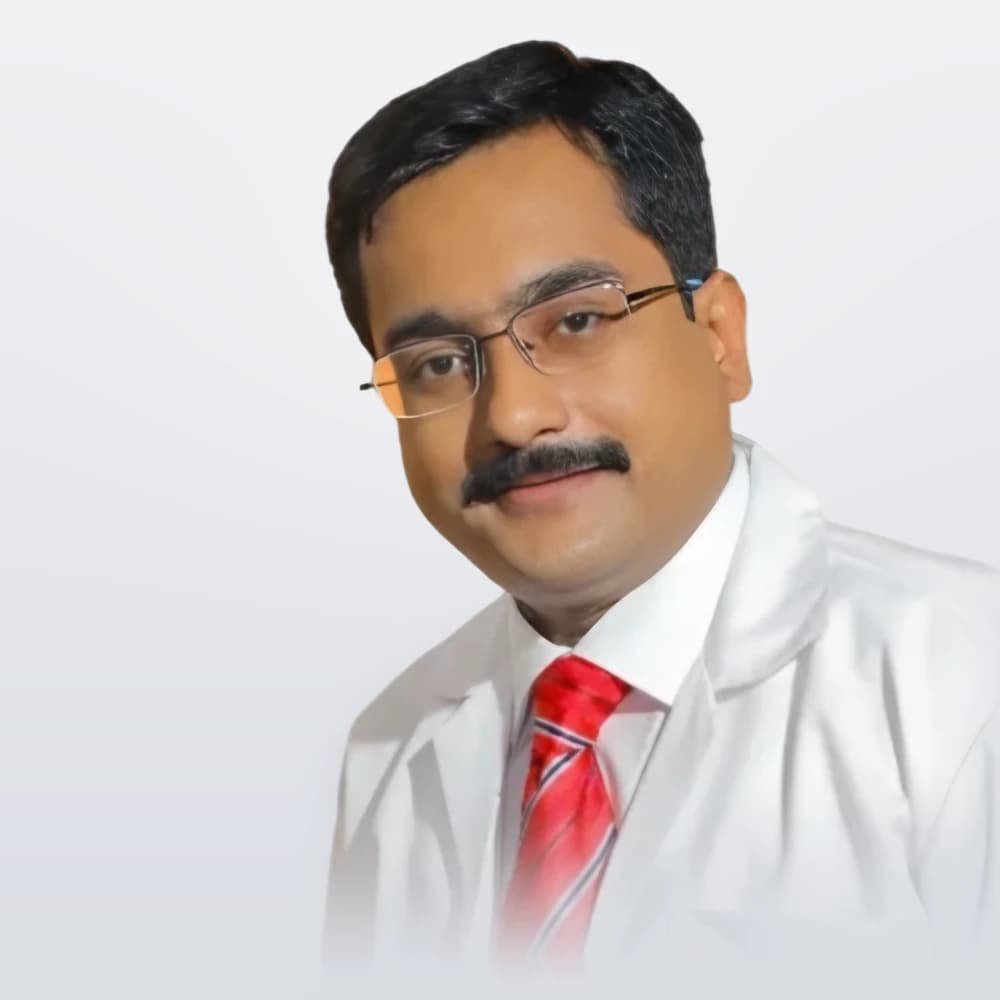
Dr. Manohar Badrappa
Also listed as Dr. Manohar
- Qualifications
- MBBS, MS (General Surgery), MCh (Urology)
- Experience
- 24 years
- Fee
- ₹700
- Languages
- English, Hindi, Kannada, Tamil, Telugu
- Registration
- KMC 63476
Kidney and ureteric stones · Urinary difficulty · Blood in urine · Prostate symptoms
Urology
Dr. Bivek Kumar
- Qualifications
- MBBS, MS (General Surgery), MCh (Urology)
- Experience
- 17 years overall; 9 as specialist
- Fee
- ₹700
- Languages
- English, Hindi, Kannada, Malayalam, Bengali
- Registration
- KMC 85041
★ 90% (101 votes) on Practo
Kidney stones · Prostate · Male reproductive health
What are kidney stones and why do they form?
Stones form when substances in urine such as calcium, oxalate, uric acid or phosphate become too concentrated and crystallise. Calcium oxalate stones are the most common type. Uric acid stones are linked to gout and high-protein diets, struvite stones to repeated infection, and cystine stones to a rare inherited condition.
Stones are more common in hot climates and in people who do not drink enough. Many office workers in air-conditioned buildings do not feel thirsty and drink far less than they need, while commuters and outdoor workers lose fluid through sweat. Once you have had one stone, the chance of another within a few years is significant, so prevention matters.
- Low fluid intake and concentrated urine
- High salt intake from pickles, papad, packaged snacks and restaurant food
- Large amounts of animal protein
- Obesity, diabetes and gout
- Family history of stones
- Recurrent urinary infections or structural problems of the kidney
- Some medicines and supplements, including high-dose vitamin C
What are the symptoms of kidney stones?
A stone sitting quietly in the kidney may cause no symptoms and be found on a scan done for another reason. Pain usually starts when a stone moves into the ureter, the narrow tube between the kidney and bladder. This renal colic comes in waves, is often described as among the worst pains people experience, and makes it hard to find a comfortable position.
Pain typically starts in the side or back below the ribs and moves towards the lower abdomen and groin as the stone travels. As it nears the bladder, it can cause urgency and frequent urination that feels like a urine infection.
- Severe, wave-like pain in the side, back or groin
- Nausea and vomiting
- Pink, red or brown urine
- Needing to urinate often or urgently
- Burning on passing urine
- Restlessness, unable to sit or lie still
When is kidney stone pain an emergency?
A stone that blocks the kidney while there is infection behind it is a urological emergency, because infection can spread to the bloodstream within hours. Go to the nearest emergency department or call 112 or 108 if any of the following apply.
Even without these signs, pain that is not controlled by the medicines you have been given needs urgent medical review the same day.
- Fever, chills or shivering with stone pain
- Unable to pass urine, or very little urine
- Pain with only one working kidney or a kidney transplant
- Persistent vomiting so you cannot keep fluids or tablets down
- Pain in pregnancy
- Feeling confused, faint or very unwell
Which doctor should I see for kidney stones?
A urologist is the specialist for kidney stones, including emergency stone management, procedures to remove stones and long-term prevention. At Lotus, the urology team sees people with stone pain, stones found on scans, recurrent stones and blood in the urine. A nephrologist may be involved when stones are linked to kidney function problems or metabolic conditions.
Book a urology appointment after any first stone episode, if a stone was found on an ultrasound, if you have had more than one stone, or if a child or young adult has a stone. If you have been treated in an emergency department, arrange urology follow-up within a few days so the stone’s progress can be checked.
- After an emergency visit for renal colic
- Stone found incidentally on a scan
- Recurrent stones or a strong family history
- Blood in the urine without explanation
- Stones with gout, diabetes or bowel disease
What happens at a urology consultation for stones?
The urologist asks about the pain, previous stones, fluid intake, diet, medical conditions, medicines and supplements. They examine the abdomen and back and review any scans you bring. Bring all previous reports and images, and any stone you have passed, collected in a clean container.
The plan depends on the stone’s size, position, the degree of blockage, your symptoms and whether there is infection. The urologist will explain whether waiting for the stone to pass is reasonable, how long to wait, and what would change that plan.
- Bring all scan reports and CDs or images
- Bring passed stones for analysis
- List supplements, including calcium and vitamin C
- Note your usual daily fluid intake
- Ask how long it is safe to wait for the stone to pass
Which tests are done for kidney stones?
A non-contrast CT scan of the kidneys, ureters and bladder (CT KUB) is the most accurate test for confirming a stone, its size and position. Ultrasound avoids radiation and is preferred in pregnancy and children, and is useful for follow-up, though it can miss small ureteric stones.
Blood tests check kidney function, infection markers, calcium and uric acid. A urine test looks for blood and infection. After a stone has passed or been removed, stone analysis and, for people with recurrent stones, a 24-hour urine collection guide prevention.
- Urine routine examination and culture
- Serum creatinine, calcium and uric acid
- Low-dose CT KUB
- Ultrasound KUB
- X-ray KUB to track some stones
- Stone analysis and 24-hour urine test
How are kidney stones treated?
Pain relief is the first step; anti-inflammatory painkillers are generally preferred when safe for you, with other medicines if needed. Many stones under about 5 mm pass within a few weeks. For some stones in the lower ureter, the urologist may prescribe a medicine such as tamsulosin to relax the ureter and help passage. Drinking enough to keep urine pale helps, but forcing very large volumes does not push a stone out faster.
Stones that are large, not moving, causing repeated pain, blocking the kidney or associated with infection need a procedure. If there is infection with blockage, the first step is to drain the kidney with a stent or a tube through the back, and the stone is treated after the infection settles.
- Pain and anti-nausea medicines
- Medical expulsive therapy for selected ureteric stones
- Shock wave lithotripsy (ESWL) for selected kidney and upper ureteric stones
- Ureteroscopy with laser for ureteric and kidney stones
- Retrograde intrarenal surgery (RIRS) for selected kidney stones
- Percutaneous nephrolithotomy (PCNL) for large stones
- Temporary ureteric stent or nephrostomy when needed
How can I prevent kidney stones in Bangalore’s climate?
Most people who have had a stone should aim to pass at least 2 to 2.5 litres of urine a day, which usually means drinking around 2.5 to 3 litres, more in hot weather or with physical work. Keep a bottle on your desk or in your bag, and drink steadily rather than in large amounts at once. Lemon water (nimbu pani) without much salt or sugar adds citrate, which can help prevent calcium stones.
Cutting down salt reduces calcium in the urine. Keep normal amounts of dietary calcium from milk, curd and buttermilk, because very low calcium intake can increase oxalate absorption and stone risk. Limit high-oxalate foods such as spinach, beetroot and large amounts of nuts only if your stone type and urine tests suggest it.
- Drink enough to keep urine pale throughout the day
- Reduce salt, pickles, papad and packaged snacks
- Keep normal dietary calcium; avoid self-prescribed calcium supplements
- Moderate meat, fish and eggs
- Limit sugary drinks and colas
- Keep a healthy weight and control diabetes
When should I follow up after a kidney stone?
If you are waiting for a stone to pass, the urologist will usually repeat imaging within a few weeks, because a stone can stop causing pain while still blocking the kidney. Do not assume the stone has gone just because the pain has stopped.
If a stent was placed, it must be removed or changed on time; a forgotten stent can become encrusted and cause serious problems. People with recurrent stones benefit from periodic review and a prevention plan tailored to their stone type.
- Repeat imaging as advised, even if pain has settled
- Note the stent removal date and keep it
- Annual review for recurrent stone formers
- Return urgently with fever or reduced urine
- NHS — Kidney stones ↗
- NICE NG118 — Renal and ureteric stones: assessment and management ↗
- NIDDK (NIH) — Kidney stones ↗
- European Association of Urology — Guidelines on Urolithiasis ↗
Medical information is general and does not replace an individual consultation.
PATIENT QUESTIONS
Kidney Stones: questions patients ask
How do I know if my pain is a kidney stone?
Stone pain is usually sudden and severe, felt in the side or back below the ribs and spreading to the lower abdomen or groin, and comes in waves. Many people cannot keep still and feel nauseous. Blood may appear in the urine. Other conditions, including appendicitis, gynaecological problems and in older people an abdominal aortic aneurysm, can feel similar, so severe pain needs medical assessment and usually a scan.
What size of kidney stone can pass naturally?
Many stones smaller than about 5 mm pass on their own within a few weeks, and some stones up to around 10 mm in the lower ureter pass with the help of medicines. Larger stones are less likely to pass and often need a procedure. Position, shape, swelling of the kidney and your symptoms also matter, so the urologist decides how long it is reasonable to wait.
Does drinking beer help pass kidney stones?
No. Beer increases urine output briefly but also causes dehydration and can raise uric acid, which contributes to some stones. It is not a treatment and can make you feel worse if you are vomiting or taking painkillers. Water is the right fluid. If you have pain from a stone, follow your urologist’s advice on fluids and medicines rather than home remedies.
Is coconut water good for kidney stones?
Coconut water is a hydrating drink and can count towards your daily fluid intake in hot weather. It is not a proven treatment to dissolve or pass stones. It is high in potassium, so people with kidney disease or on certain medicines should check with their doctor. Plain water, with some lemon water for citrate, remains the mainstay of stone prevention.
Should I avoid tomatoes and spinach if I have kidney stones?
Not necessarily. Spinach is high in oxalate and may be limited if you form calcium oxalate stones and your urine tests suggest high oxalate. Tomatoes are relatively low in oxalate, and their seeds do not cause stones. Avoid broad food bans; instead, ask for stone analysis and urine tests so that dietary advice matches your stone type.
Which is better for kidney stones: ESWL, ureteroscopy or PCNL?
Each suits different situations. Shock wave lithotripsy works without incisions for some smaller kidney and upper ureteric stones but may need repeat sessions. Ureteroscopy with laser treats stones in the ureter and kidney through the natural passage. PCNL, through a small opening in the back, is generally used for large stones. Your urologist chooses based on stone size, position, hardness, your anatomy and your preferences.
Why did my urologist put a stent in, and does it hurt?
A ureteric stent is a thin, soft tube placed between the kidney and bladder to keep urine flowing, often after ureteroscopy or when infection or swelling blocks the kidney. Many people feel urgency, frequency, some blood in the urine or discomfort in the side when passing urine. These settle once the stent is removed. Always keep the removal date, because stents left too long can cause problems.
Will I get kidney stones again?
Recurrence is common, and a significant proportion of people form another stone within several years. Drinking enough to keep urine pale, reducing salt, keeping normal calcium intake and moderating animal protein lower the risk. If you have had more than one stone, stone analysis and a 24-hour urine test help your urologist design a prevention plan, which may include medicines.
LOCATION & DIRECTIONS
Getting to Lotus Hospital, HSR Layout
Lotus Multi Speciality Hospital
2361, 24th Main Road, 1st Sector, HSR Layout, Bengaluru, Karnataka 560102
Near Bangalore One, HSR Layout 1st Sector
Open 24 hours, 7 days · OPD timings vary by doctor
Lotus is on 24th Main Road in Sector 1, near Bangalore One. Autos and cabs can drop at the entrance on 24th Main.
Head into HSR Sector 1 from the Agara Lake side of the Outer Ring Road and continue to 24th Main Road.
Take the Sarjapur Road or 27th Main HSR approach towards Sector 1, then turn onto 24th Main Road.
Travel along the Outer Ring Road towards Agara, enter HSR Layout Sector 1 and continue to 24th Main Road.
Use the Outer Ring Road from Silk Board towards HSR Layout and turn into Sector 1.
Cross from Hosur Road into HSR Layout through the Sector 7 side and continue north to Sector 1.
Come towards Agara and the Outer Ring Road junction, then into HSR Layout Sector 1.
Take Hosur Road to Silk Board, then the Outer Ring Road into HSR Layout. Best for planned visits.
Travel time changes with traffic. Check live directions before you leave and allow time for registration.