
Varicose veins are swollen, twisted veins, usually on the legs, that can cause aching, heaviness, ankle swelling, itching and night cramps, and over time skin darkening or ulcers. The doctor to see is a vascular surgeon, who uses a duplex ultrasound scan to find the faulty veins. Many people manage with simple measures, while others benefit from minimally invasive treatment that seals the vein from inside.
WHICH DOCTOR SHOULD I SEE?
See a vascular surgeon for varicose veins
At Lotus Hospital in HSR Layout, varicose veins is assessed by the Vascular Surgery team. For severe or sudden symptoms, go to the nearest emergency department or call 112.
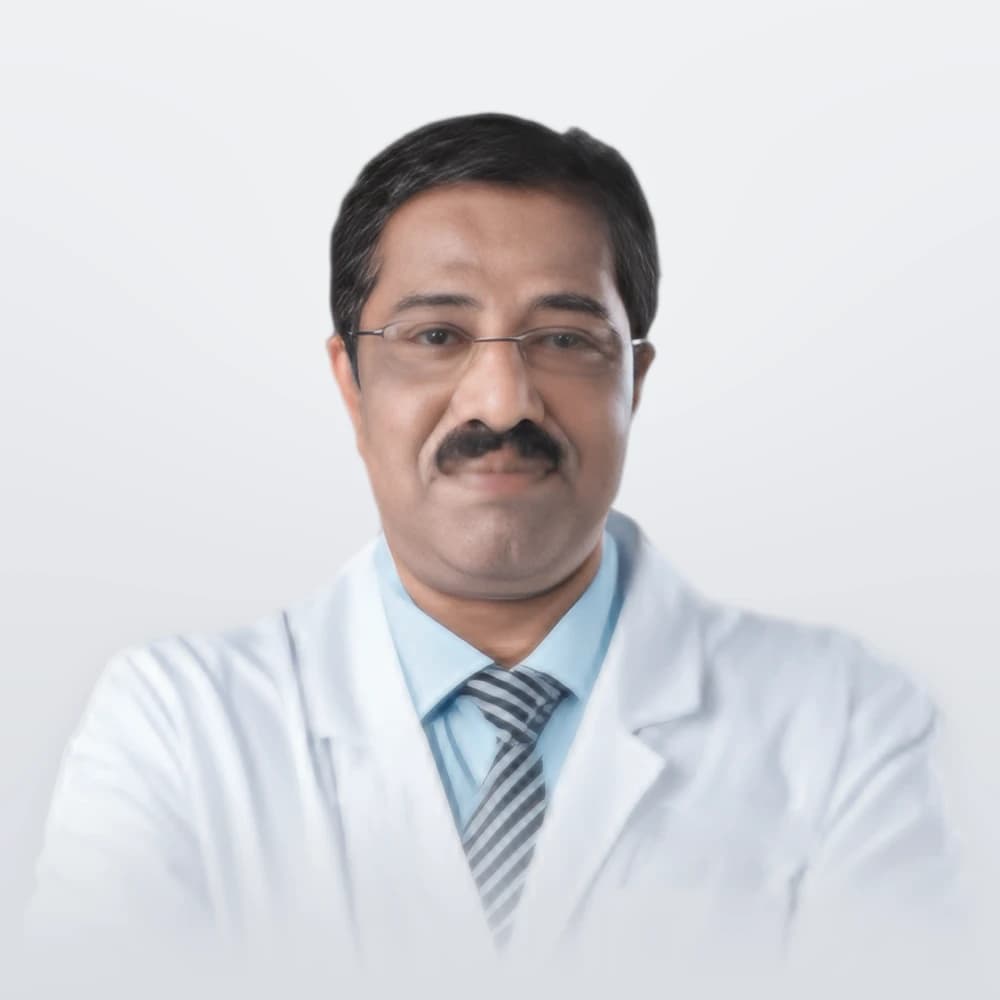
Vascular & Endovascular Surgery
Dr. Venkatesh Reddy K
Also listed as Dr. Venkatesh Reddy
- Qualifications
- MBBS, MS, FICS, FRCS (Glasgow), FVSI, FVES
- Experience
- 29 years as specialist
- Fee
- ₹700
- Languages
- English, Kannada, Telugu, Hindi, Tamil
- Registration
- KMC 46256
Varicose veins · Leg swelling · Leg pain while walking · Non-healing wounds
What are varicose veins and why do they happen?
Veins in the legs carry blood back to the heart against gravity, helped by calf muscle pumping and one-way valves. When these valves weaken, blood flows backwards and pools, stretching the veins until they bulge. The most commonly affected veins are the great and small saphenous veins and their branches just under the skin.
Spider veins (thread veins) are tiny, flat red or purple veins and are mainly a cosmetic concern. Varicose veins are larger, usually more than 3 mm across, and can cause symptoms and complications. Jobs that involve standing for long hours, such as teaching, retail, security, cooking, traffic duty and factory work, are commonly associated with symptoms.
- Family history of varicose veins
- Standing or sitting still for long periods
- Pregnancy, especially more than one
- Increasing age
- Being overweight
- Previous deep vein thrombosis (DVT)
- Women are affected more often
What are the symptoms of varicose veins?
Many people notice bulging blue or purple veins on the calf or inner thigh. Symptoms are usually worse at the end of the day or after standing and ease when the legs are raised. Ankle swelling that is better in the morning is common.
Long-standing venous pressure damages the skin of the lower leg. It may darken to brown, become dry, itchy and eczema-like, or turn hard and tight. Without treatment, some people develop a venous ulcer, usually near the inner ankle, which can be slow to heal.
Symptoms often feel worse in hot weather, around periods and during pregnancy, when veins dilate further.
- Visible bulging, twisted veins
- Aching, heaviness or tiredness in the legs
- Ankle swelling by evening
- Night cramps or restless legs
- Itching over the veins
- Brown discolouration or eczema near the ankle
- A sore or ulcer that does not heal
When are varicose veins an emergency?
Varicose veins themselves are rarely dangerous, but some complications need urgent care. A bleeding varicose vein can lose a lot of blood quickly: lie down, raise the leg above heart level and press firmly on the spot with a clean cloth while help is arranged.
If any of the following apply, go to the nearest emergency department or call 112 or 108.
- A varicose vein bleeding heavily or not stopping with pressure
- Sudden painful swelling of one calf or the whole leg (possible DVT)
- Chest pain, coughing blood or sudden breathlessness (possible clot in the lungs)
- A hot, red, hard and very painful vein, especially in the upper thigh
- A leg ulcer with spreading redness, fever or feeling unwell
Which doctor should I see for varicose veins?
A vascular surgeon specialises in arteries and veins and is the right doctor for varicose veins, venous swelling and venous ulcers. At Lotus, the vascular surgery team assesses symptoms, arranges duplex scanning and discusses treatment.
Book an appointment if your veins ache, itch or cause swelling, if the skin near your ankle is changing colour or becoming hard, if you have had bleeding or a clot in a vein, or if you have an ulcer that has not healed within two weeks. People with diabetes or poor circulation who develop a leg wound should be assessed promptly.
- Aching, heaviness or swelling affecting daily life
- Skin changes near the ankle
- A leg wound that has not healed in two weeks
- Previous bleeding or superficial vein clot
- Varicose veins returning after earlier treatment
What happens at a vascular consultation?
The vascular surgeon asks about symptoms, work, pregnancies, previous clots, family history and any treatments tried. They examine your legs standing, look at the skin and feel the pulses to check arterial circulation, which matters before using compression.
A duplex ultrasound maps which veins are leaking and is used to plan treatment. The surgeon then explains the options, recovery and the chance of new veins appearing in future.
Many people worry that closing a vein will harm circulation. The leg has many other veins, and the deep veins carry most of the blood back to the heart, so sealing a faulty superficial vein usually improves flow rather than reducing it. The scan confirms the deep veins are healthy before treatment is planned.
- Wear loose clothing so legs can be examined
- Bring reports of previous scans or procedures
- Mention any history of clots or blood thinners
- Describe how long you stand or sit at work
- Ask what the scan shows and which veins are affected
Which tests are done for varicose veins?
Venous duplex ultrasound is the key test. It shows the direction of blood flow in each vein, the valves that are leaking, and whether the deep veins are healthy or have old clots.
Ankle-brachial pressure index (ABPI), comparing blood pressure at the ankle and arm, checks for arterial disease before compression stockings or bandages, because compression can be harmful when arterial circulation is poor.
- Venous duplex ultrasound
- Ankle-brachial pressure index
- Blood tests in selected cases, such as for clotting problems
- Wound swab if an ulcer looks infected
How are varicose veins treated?
For people with symptoms and leaking veins on the scan, guidelines recommend endothermal ablation first, using radiofrequency or laser energy delivered through a thin catheter to seal the faulty vein from inside. It is usually done under local anaesthetic as a day procedure. Foam sclerotherapy, injecting a medicine that closes the vein, is an option when ablation is not suitable, and open surgery to tie and remove the vein is used less often today.
Other techniques such as medical adhesive (glue) closure and mechanochemical ablation are used in selected cases. Compression stockings ease symptoms and are central to ulcer care, but they do not fix the leaking vein. Spider veins can be treated with injection sclerotherapy for cosmetic reasons.
After an ablation procedure, you are usually encouraged to walk the same day and may be asked to wear a compression stocking for a period. Bruising and a tight, cord-like feeling along the treated vein are common and settle over a few weeks. Treatment during pregnancy is generally deferred, because veins often improve after delivery.
- Leg elevation, walking and calf exercises
- Graduated compression stockings, properly measured
- Radiofrequency or laser ablation
- Ultrasound-guided foam sclerotherapy
- Adhesive closure in selected cases
- Ligation and stripping when other methods are unsuitable
- Compression and wound care for venous ulcers
How can I prevent varicose veins from getting worse?
Keep the calf muscle pump working. If your job involves standing, shift weight, rise onto your toes and walk around whenever possible. If you sit at a desk, take a short walk every 30 to 60 minutes and avoid sitting with legs crossed for long periods. Raising your legs above hip level for 15 to 20 minutes in the evening reduces swelling.
Maintain a healthy weight, stay active with walking, cycling or swimming, and moisturise the skin of the lower legs to prevent cracking and itching, which is common in dry months. Avoid scratching itchy skin over veins, because small wounds can turn into ulcers.
- Walk daily and do calf raises at work
- Avoid standing still for long stretches
- Raise your legs when resting
- Keep a healthy weight
- Moisturise dry lower-leg skin
- Wear prescribed compression stockings consistently
- Choose comfortable footwear over high heels for long days
When should I follow up for varicose veins?
After ablation or foam treatment, a follow-up scan is often arranged to confirm the vein has closed and to check the deep veins. Mild bruising, tightness and lumpiness along the treated vein are common for a few weeks.
Varicose veins can develop again over the years, so return if symptoms or skin changes come back. People with venous ulcers need regular review until healing and long-term compression afterwards to reduce recurrence.
- Follow-up scan after treatment as advised
- Report sudden calf swelling or chest symptoms immediately
- Regular review for venous ulcers
- Return if new veins or skin changes appear
- NHS — Varicose veins ↗
- NICE CG168 — Varicose veins: diagnosis and management ↗
- NHS — DVT (deep vein thrombosis) ↗
Medical information is general and does not replace an individual consultation.
PATIENT QUESTIONS
Varicose Veins: questions patients ask
Are varicose veins dangerous?
Most varicose veins are not dangerous, but they can cause aching, swelling and skin changes. Over time, some people develop skin darkening, eczema or ulcers near the ankle. Less commonly, a vein can bleed heavily, or a clot can form in a superficial vein. Painful swelling of the whole calf or leg, or chest symptoms, need emergency care because they can indicate a deep vein clot.
Can compression stockings get rid of varicose veins?
Compression stockings do not repair leaking valves or remove varicose veins, but they can ease aching and swelling and are important in treating and preventing venous ulcers. They need to be the correct pressure and size, and your circulation should be checked before using them. If you have symptoms and leaking veins on scan, procedures such as ablation are usually more effective.
Is laser treatment for varicose veins painful?
Endovenous laser and radiofrequency ablation are usually done under local anaesthetic injected along the vein. Most people feel some pressure and mild discomfort during the procedure, and bruising or tightness along the treated vein for a few weeks afterwards. Simple painkillers and walking help. Most people return to normal activity within a few days, following their surgeon’s advice.
Can varicose veins come back after treatment?
Yes. Treated veins usually stay closed, but new varicose veins can develop over the years because the underlying tendency remains. Pregnancy, weight gain and long periods of standing increase the chance. Regular walking, leg elevation and wearing prescribed compression stockings help. If symptoms or visible veins return, a repeat duplex scan helps decide whether further treatment is needed.
Should I treat varicose veins during pregnancy?
Varicose veins often appear or worsen in pregnancy and frequently improve within months after delivery. Procedures are generally postponed until after pregnancy. Meanwhile, compression stockings, leg elevation, regular walking and avoiding long periods of standing ease symptoms. Seek urgent care for a painful, swollen calf, a red, hard, tender vein or any bleeding, as clots are more common in pregnancy.
Is exercise good for varicose veins?
Yes. Walking, cycling and swimming strengthen the calf muscles, which pump blood back towards the heart and reduce pooling in leg veins. Calf raises during the day help people who stand for work. Very heavy lifting with breath-holding may temporarily increase pressure in leg veins, so build up gradually. Exercise eases symptoms but does not reverse existing varicose veins.
What are spider veins and do they need treatment?
Spider veins are tiny, flat red, blue or purple veins near the skin surface, often on the thighs and ankles. They are usually a cosmetic concern and do not cause complications. Treatment such as injection sclerotherapy is optional. If spider veins appear with aching, swelling or bulging veins, a duplex scan can check whether there is an underlying leaking vein that needs attention.
Why is the skin around my ankle turning dark?
Long-standing high pressure in leg veins can cause blood pigments to leak into the skin, leading to brown discolouration, itching, eczema and hardening around the ankle. This is a sign of chronic venous disease and indicates a higher risk of ulcers. It should be assessed by a vascular surgeon, who may recommend a duplex scan and treatment to reduce venous pressure.
LOCATION & DIRECTIONS
Getting to Lotus Hospital, HSR Layout
Lotus Multi Speciality Hospital
2361, 24th Main Road, 1st Sector, HSR Layout, Bengaluru, Karnataka 560102
Near Bangalore One, HSR Layout 1st Sector
Open 24 hours, 7 days · OPD timings vary by doctor
Lotus is on 24th Main Road in Sector 1, near Bangalore One. Autos and cabs can drop at the entrance on 24th Main.
Head into HSR Sector 1 from the Agara Lake side of the Outer Ring Road and continue to 24th Main Road.
Take the Sarjapur Road or 27th Main HSR approach towards Sector 1, then turn onto 24th Main Road.
Travel along the Outer Ring Road towards Agara, enter HSR Layout Sector 1 and continue to 24th Main Road.
Use the Outer Ring Road from Silk Board towards HSR Layout and turn into Sector 1.
Cross from Hosur Road into HSR Layout through the Sector 7 side and continue north to Sector 1.
Come towards Agara and the Outer Ring Road junction, then into HSR Layout Sector 1.
Take Hosur Road to Silk Board, then the Outer Ring Road into HSR Layout. Best for planned visits.
Travel time changes with traffic. Check live directions before you leave and allow time for registration.